
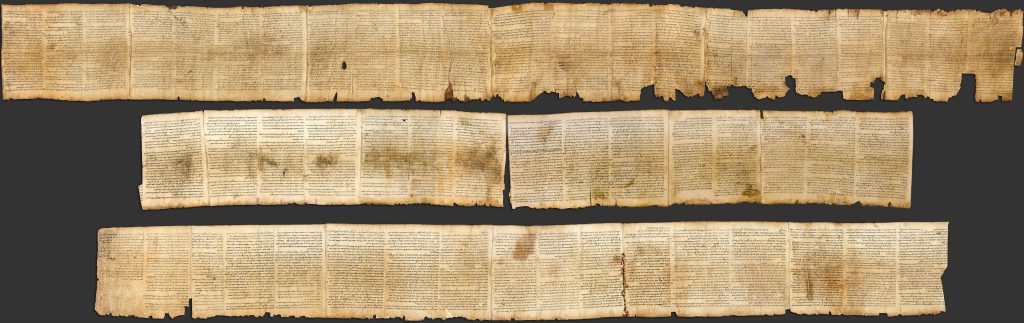
Few passages in the Old Testament have generated more debate than Isaiah 52:13–53:12. For Christians, it has long been read as one of the clearest prophetic portraits of the Messiah’s (Jesus) suffering, rejection, death, and vindication as discussed in our article: Isaiah 53. In much of later Jewish interpretation, however, the “servant” is often understood collectively as the nation of Israel. This begs the question: Who is the suffering servant in Isaiah 53?
⚖️The Two Main Views
Two main views dominate the discussion. The first understands the servant as Israel collectively, drawing support from earlier chapters in Isaiah where the servant is explicitly called “Israel” or “Jacob” (Isaiah 41:8–9; 44:1–2, 21). The second sees the servant as an individual figure, understood in both Jewish and Christian tradition as the Messiah. The debate is not whether “servant” can ever refer to Israel. It clearly can. The real question is whether that meaning still fits Isaiah 52:13–53:12.
📜 Early Jewish and Christian Interpretations of Isaiah 53
One important point is often missed at the outset: the messianic reading of Isaiah 53 is not a later Christian invention. Isaiah 52:13–53:12 never explicitly identifies the servant as Israel, and early Jewish sources such as the Targum Jonathan and Sanhedrin 98b show that parts of the passage could be read messianically.
| Source | Approximate Date | Interpretation of Isaiah 53 |
|---|---|---|
| Acts 8:32–35 | 1st century AD | Applies Isaiah 53 directly to Jesus. |
| Targum Jonathan | 2nd–3rd centuries AD (final form, though some traditions are likely earlier) | Identifies Isaiah 52:13 with the Messiah (while reworking elements of the chapter).3 |
| Origen’s report of Jewish interlocutors | Early 3rd century AD | Reports that some Jews interpreted the servant as the whole people, not an individual Messiah.4 |
| Sanhedrin 98b | 5th–6th centuries AD (Babylonian Talmud redaction) | Applies Isaiah 53:4 to the Messiah.5 |
| Rashi | 1040–1105 AD | Strongly influential in popularizing the collective-Israel reading in later medieval Jewish exegesis.6 |
Israel reading proponents such as Bart Ehrman argue that “the idea of a suffering messiah is not found in any Jewish texts prior to Christianity.”1 That observation sounds decisive, but it proves much less than he suggests. It is an argument from the limits of our surviving evidence, not a demonstration that Isaiah 53 could not have been read messianically before Christianity. The extant record is sparse in both directions. We do not possess a large body of pre-Christian Jewish commentary explicitly fixing Isaiah 53 either as a suffering Messiah or as Israel in the later rabbinic sense.
What the surviving evidence actually shows is a more complex picture: Targum Jonathan later identifies Isaiah 52:13 with “the Messiah”; Origen reports that some Jews in his day read the servant collectively as the people; and Sanhedrin 98b later applies Isaiah 53:4 to the Messiah. In other words, the evidence does not support a single early consensus that Christians later overturned. It shows that Isaiah 53 remained contested amongst the Jewish community, and that messianic readings of Isaiah 53 were not exclusively Christian.
🧭 The Servant Songs Narrow to an Individual
One of the strongest internal arguments for a messianic reading of Isaiah 53 is the way the servant imagery develops across Isaiah 40–55.
Servant Song Passages Leading to Isaiah 53
In Isaiah 42, the servant is introduced as one who will bring justice. Elsewhere in this section of Isaiah, the servant is explicitly identified with Israel or Jacob (Isaiah 41:8–9; 44:1–2, 21; 45:4; and most directly in 49:3). Critics such as Bart Ehrman often present Isaiah 49:3 as though it settles the question: “The suffering servant is Israel.”1 But that claim is more assertive than the text allows. In his article, Bart Ehrman treats verse 3 as decisive without reckoning with the very next verses, which immediately complicate a purely collective Israel reading.
In Isaiah 49:5-6, the servant is then called “to bring Jacob back” and “to raise up the tribes of Jacob” (49:5–6). At minimum, this distinguishes the servant from the nation he is sent to restore. In Isaiah 50, the servant speaks in the first person about personal suffering: “I gave my back to those who strike, and my cheeks to those who pull out the beard” (50:6). By the time we reach Isaiah 52:13–53:12, the portrait has narrowed further into a single suffering figure who is rejected, killed, and then vindicated.
Servant Song: 52:13–53:12
Israel view proponents rightly note that singular language alone does not prove an individual reading. Prophetic literature can personify nations and cities as we see throughout the Bible. But Isaiah 53 goes beyond ordinary personification. The servant is not merely described as suffering in collective or poetic terms. He is portrayed in a sustained, personal, almost biographical way with language that is only found in this passage. He is despised, silent before his accusers, cut off from the land of the living, buried, and then vindicated. Even within Isaiah itself, this is unusually concentrated and specific language.
At this point, the case can be stated more directly. Isaiah 53 does not merely allow a messianic reading; several features of the passage are difficult to reconcile with a purely collective reading of Israel. None of the following features proves the identity of the servant all by itself, but taken together, they fit an individual, messianic figure more naturally than they fit the nation as a whole.
📖 Why Isaiah 53 Fits an Individual, Messianic Reading More Naturally
1. The servant is distinguished from Israel, not simply equated with it.
The collective reading is often presented as straightforward: the servant is Israel, and the speakers in Isaiah 53 are the Gentile nations. In practice, however, the reading becomes increasingly difficult to sustain without qualification. Earlier in Isaiah, the servant can clearly be called Israel. Yet as the Servant Songs progress, interpreters are often forced to narrow that identity from Israel as a whole to faithful Israel or a righteous remnant in order to explain the servant’s innocence, representative suffering, and distinction from those for whom he suffers.
The identity tension becomes especially clear in Isaiah 49, where the servant is called to restore Israel, suggesting that he cannot be reduced to the nation in a simple one-to-one sense. For that reason, the main issue is not whether “servant” can ever refer to Israel, but whether that identification still works without qualification in Isaiah 52:13–53:12.
2. The servant is innocent, yet suffers for the sins of others.
Isaiah 53 does not simply describe suffering but rather describes an innocent sufferer: “he had done no violence, and there was no deceit in his mouth” (53:9). At the same time, his suffering is explicitly for others: “he was pierced for our transgressions,” “he was crushed for our iniquities,” and “the Lord has laid on him the iniquity of us all” (53:5–6). That combination is difficult to map onto Israel as a nation, since Isaiah repeatedly portrays Israel as sinful, rebellious, and in need of restoration. The appeal to a righteous remnant helps only partially, because elsewhere in the Old Testament the remnant is typically purified through judgment and joins in confession. In other passages, Israel is never presented as an already innocent figure whose suffering brings healing to the guilty. In Daniel 9, even a faithful Israelite like Daniel joins in corporate confession, saying “we have sinned,” rather than appearing as an innocent representative.
3. Isaiah 53 uses sacrificial and expiatory language in a unique and unusually concentrated way.
Verse 10 describes the servant’s life as an asham — a guilt offering — and the chapter repeatedly returns to the language of bearing sin, intercession, and suffering on behalf of others.2 The Old Testament is full of metaphor, and Israel’s history is often described through the cycle of rebellion, judgment, repentance, and restoration. But that is not how Isaiah 53 frames the servant. The nation is repeatedly called to repent and be healed; they are never presented as a collective asham offered for the sins of others. By contrast, Isaiah 53 places the servant within a distinctly sacrificial and expiatory framework. Critics may argue that this is still metaphorical, but the imagery is unusually specific. His suffering functions in a way that resembles priestly and sacrificial atonement in a way not paralleled elsewhere in the Bible.
4. The portrait is unusually personal and biographical, not merely corporate.
Biblical poetry can personify nations and cities. Jerusalem, for example, is personified as a woman in Isaiah 54 and Lamentations. Collective entities elsewhere in prophetic literature are also described in similar, vidid, and personal language. Defenders of the Israel reading therefore argue that Isaiah 53 simply heightens the trauma of exile through intense personification. However, Isaiah 53 is not only singular in grammar; it is singular in concentration. The passage stacks more than a dozen personal and biographical details onto the servant: he grows up, lacks majesty, is despised, rejected, sorrowful, silent, cut off from life, buried, and then vindicated. That kind of concentrated portrait goes well beyond ordinary corporate personification. Isaiah 53 reads far more naturally as the description of one suffering individual than as a poetic symbol for the nation.
5. The chapter creates a strong “we/he” distinction.
The chapter creates a sharp distinction between the servant and the speakers. Throughout Isaiah 53, the speakers confess their guilt using the language of “we,” “our,” and “us”: “we esteemed him stricken,” “he was pierced for our transgressions,” and “the Lord has laid on him the iniquity of us all” (Isaiah 53:4–6). Whatever group the speakers represent, the poem’s structure depends on a clear contrast: the servant suffers, and the speakers confess that his suffering was for them.
That creates a serious difficulty for readings that identify the servant too closely with the same collective voice that says “we.” The passage does not describe a group suffering for itself. It describes one figure bearing the sins of others.
Some interpreters, such as Rashi, avoid this by identifying the speakers as the Gentile nations and their kings, drawing from Isaiah 52:15. But that solution introduces a different problem: it seems to make Israel’s suffering a vicarious bearing of Gentile sin, a concept with little support elsewhere in Jewish texts. That reading may preserve the distinction within the poem, but it does so by introducing a broader theological claim that is itself difficult to parallel elsewhere. This reading also creates an intriguing parallel to the Christian perspective, where the servant bears sins universally (for Jews and Gentiles alike). Christians see this realized in Jesus’ life, death, and vindication, whereas no equivalent historical moment of Gentile confession and atonement through Israel’s suffering appears in Jewish history.
📝 Conclusion
Isaiah 53 is debated, but the text itself resists a purely collective reading of Israel. The servant is distinguished from Israel, described as innocent, suffers for the sins of others, is framed in sacrificial language, and is portrayed with a level of personal detail that goes far beyond ordinary national personification. Taken together, these features point more naturally to an individual, representative figure than to the nation as a whole.
The collective reading can explain parts of the passage, but only by repeatedly narrowing, shifting, or redefining who the servant is. What begins as “the servant is Israel” often ends up looking much closer to a distinct figure who stands over against the people and suffers on their behalf. The messianic reading, by contrast, fits the chapter’s literary and theological contours more naturally, and has also been embraced within both Christian and some Jewish interpretive traditions.
That is why Isaiah 53 has remained so compelling for Christians from the beginning. It does not merely resemble the story of Jesus in a vague or suggestive way. It presents a singular suffering servant who bears the sins of others, is cut off, and is afterward vindicated. For that reason, Isaiah 53 stands as one of the strongest prophetic portraits of the Messiah in the Old Testament.
📚 References
- Ehrman, Bart D. “Does Isaiah 53 Predict Jesus’ Death and Resurrection?” The Bart Ehrman Blog.
- Motyer, J. Alec. The Prophecy of Isaiah: An Introduction and Commentary. Downers Grove, IL: InterVarsity Press, 1993.
- Targum Jonathan on Isaiah 52:13.
- Origen. Contra Celsum.
- Babylonian Talmud. Sanhedrin 98b.
- Rashi. Commentary on Isaiah 53.
📚 Popular Resources for further study
- Gavin Ortlund: Is Isaiah 53 About Jesus
- Jon Oleksiuk: Isaiah 53 Predict Jesus or Israel? AI Judges the Evidence
Leave a Reply