
Psalm 22 and the Messiah's Suffering
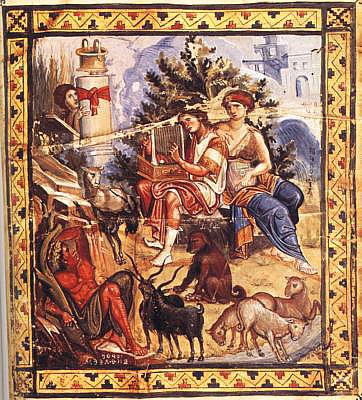
Psalm 22 is one of the most prominent Old Testament passages connected with the crucifixion of Jesus. Written centuries before the New Testament era, it describes a righteous sufferer surrounded by mockers, physically broken, publicly shamed, and ultimately vindicated. Several details in Psalm 22 closely parallel the Gospel accounts, leading many to view the psalm as an important foreshadowing of the Messiah's suffering and vindication.
📜 Psalm 22 Historical Background
Psalm 22 is attributed to David and is framed as the cry of a righteous sufferer in extreme distress. On one level, it reflects the experience of the psalmist himself. Yet the psalm reaches beyond ordinary lament, describing public mockery, bodily agony, divided garments, and ultimately the worldwide proclamation of God’s deliverance. For that reason, Christians have long read Psalm 22 not only as David’s lament, but also as a passage that foreshadows the suffering and vindication of the Messiah.
It is also important to note that the messianic reading is not exclusively Christian. In Jewish tradition, Psalm 22 was more commonly understood as David’s lament or applied to Israel and Esther, but some later rabbinic sources also connect its suffering imagery to the Messiah, especially in Pesikta Rabbati’s portrayal of Messiah Ephraim.1 That means the messianic reading has some Jewish precedent, even if it was not the dominant Jewish interpretation.
⏳ Prophetic Fulfillments:
| Psalm 22 Reference | Description | NT Fulfillment |
|---|---|---|
| Psalm 22:1–21 My God, my God, why have you forsaken me? Why are you so far from saving me, from the words of my groaning? 2 O my God, I cry by day, but you do not answer, and by night, but I find no rest. | Cry of abandonment | Matthew 27:4646 And about the ninth hour Jesus cried out with a loud voice, saying, “Eli, Eli, lema sabachthani?” Mark 15:3434 And at the ninth hour Jesus cried with a loud voice, “Eloi, Eloi, lema sabachthani?” |
| Psalm 22:7–87 All who see me mock me; they make mouths at me; they wag their heads; 8 “He trusts in the Lord; let him deliver him; let him rescue him, for he delights in him!” | Mocked by onlookers | Matthew 27:39–4439 And those who passed by derided him, wagging their heads 40 and saying, “You who would destroy the temple and rebuild it in three days, save yourself! If you are the Son of God, come down from the cross.”... Mark 15:29–3229 And those who passed by derided him, wagging their heads and saying, “Aha! You who would destroy the temple and rebuild it in three days, 30 save yourself, and come down from the cross!”... |
| Psalm 22:1414 I am poured out like water, and all my bones are out of joint; my heart is like wax; it is melted within my breast; | Physical agony and weakness | John 19:2828 After this, Jesus, knowing that all was now finished, said (to fulfill the Scripture), “I thirst.” Luke 23:4646 Then Jesus, calling out with a loud voice, said, “Father, into your hands I commit my spirit!” |
| Psalm 22:1616 For dogs encompass me; a company of evildoers encircles me; they have pierced my hands and feet — | Hands and feet pierced | John 20:2525 So the other disciples told him, “We have seen the Lord.” But he said to them, “Unless I see in his hands the mark of the nails, and place my finger into the mark of the nails, and place my hand into his side, I will never believe.” John 20:2727 Then he said to Thomas, “Put your finger here, and see my hands; and put out your hand, and place it in my side. Do not disbelieve, but believe.” |
| Psalm 22:1818 they divide my garments among them, and for my clothing they cast lots. | Garments divided by lot | Matthew 27:3535 And when they had crucified him, they divided his garments among them by casting lots. John 19:23–2423 When the soldiers had crucified Jesus, they took his garments and divided them into four parts, one part for each soldier; also his tunic. But the tunic was seamless, woven in one piece from top to bottom, 24 so they said to one another, “Let us not tear it, but cast lots for it to see whose it shall be.” This was to fulfill the Scripture... |
| Psalm 22:2222 I will tell of your name to my brothers; in the midst of the congregation I will praise you: | God proclaimed after suffering | Hebrews 2:1212 saying, “I will tell of your name to my brothers; in the midst of the congregation I will sing your praise.” |
| Psalm 22:27–3127 All the ends of the earth shall remember and turn to the Lord, and all the families of the nations shall worship before you. 28 For kingship belongs to the Lord, and he rules over the nations... | Worldwide impact and redemption | John 19:3030 When Jesus had received the sour wine, he said, “It is finished,” Revelation 7:99 After this I looked, and behold, a great multitude that no one could number, from every nation, from all tribes and peoples and languages, standing before the throne and before the Lamb, clothed in white robes, with palm branches in their hands, |
📜 Key Parallels in Psalm 22
🙏 “My God, My God, Why Have You Forsaken Me?”
"My God, my God, why have you forsaken me?" (Psalm 22:11 My God, my God, why have you forsaken me? Why are you so far from saving me, from the words of my groaning?)
Psalm 22 opens with a cry, which is famously quoted by Jesus from the cross in Matthew 27:4646 And about the ninth hour Jesus cried out with a loud voice, saying, “Eli, Eli, lema sabachthani?” and Mark 15:3434 And at the ninth hour Jesus cried with a loud voice, “Eloi, Eloi, lema sabachthani?”. In a Jewish world shaped by Scripture, public recitation, and memorization, hearers familiar with the Psalms could have recognized Jesus’s words as an allusion to Psalm 22 as a whole. By quoting its opening line, He draws attention to a passage that moves from suffering to vindication.
🙈 Mockery and Scorn
"All who see me mock me; they hurl insults, shaking their heads. 'He trusts in the Lord,' they say, 'let the Lord rescue him…'" (Psalm 22:7–87 All who see me mock me; they make mouths at me; they wag their heads; 8 “He trusts in the Lord; let him deliver him; let him rescue him, for he delights in him!”)
Psalm 22:7-87 All who see me mock me; they make mouths at me; they wag their heads; 8 “He trusts in the Lord; let him deliver him; let him rescue him, for he delights in him!” closely parallels the mockery of Jesus during the crucifixion. Matthew 27:39–4339 And those who passed by derided him, wagging their heads 40 and saying, “You who would destroy the temple and rebuild it in three days, save yourself! If you are the Son of God, come down from the cross.”... and Mark 15:29–3229 And those who passed by derided him, wagging their heads and saying, “Aha! You who would destroy the temple and rebuild it in three days, 30 save yourself, and come down from the cross!”... describe passersby mocking Him, shaking their heads, and challenging Him to save Himself and come down from the cross. The chief priests, scribes, and elders likewise ridicule Him, saying, “He saved others; he cannot save himself.” Matthew also preserves the especially close line, “He trusts in God; let God deliver him now,” which closely echoes the wording of Psalm 22:88 “He trusts in the Lord; let him deliver him; let him rescue him, for he delights in him!”. The overlap in both gesture and language makes this one of the clearest parallels between the psalm and the crucifixion accounts.
💧 Physical Agony and Collapse
"I am poured out like water, and all my bones are out of joint…" (Psalm 22:1414 I am poured out like water, and all my bones are out of joint; my heart is like wax; it is melted within my breast;)
Psalm 22:1414 I am poured out like water, and all my bones are out of joint; my heart is like wax; it is melted within my breast; describes the sufferer as “poured out like water” with bones out of joint, language that vividly conveys bodily weakness, exhaustion, and collapse. Christians have long seen this as closely paralleling the extreme physical suffering of crucifixion, including the agony, dehydration, and bodily deterioration described in the passion narratives.
🔩 Pierced Hands and Feet
"They pierce my hands and my feet." (Psalm 22:1616 For dogs encompass me; a company of evildoers encircles me; they have pierced my hands and feet —)
Psalm 22:1616 For dogs encompass me; a company of evildoers encircles me; they have pierced my hands and feet — contains one of the most discussed lines in the psalm and has long been connected with Jesus’s crucifixion. This verse is textually debated, since the Masoretic Text reads differently, while the Septuagint reflects the wording “they pierced.” The different translations will be further addressed in the textual criticism section. Nevertheless, for those who use the Septuagint reading, this remains one of the clearest parallels between Psalm 22 and the Gospel accounts of Jesus’s suffering.
🎲 Dividing Garments by Lot
"They divide my clothes among them and cast lots for my garment." (Psalm 22:1818 they divide my garments among them, and for my clothing they cast lots.)
Psalm 22:1818 they divide my garments among them, and for my clothing they cast lots. also has a very direct correspondence with the crucifixion narratives. Matthew 27:3535 And when they had crucified him, they divided his garments among them by casting lots. and John 19:23–2423 When the soldiers had crucified Jesus, they took his garments and divided them into four parts, one part for each soldier; also his tunic. But the tunic was seamless, woven in one piece from top to bottom, 24 so they said to one another, “Let us not tear it, but cast lots for it to see whose it shall be.” This was to fulfill the Scripture... record Roman soldiers dividing Jesus’s garments and casting lots for His clothing, presenting the event as a fulfillment of Scripture.
📣 Verse 22: Declaration and Resurrection
"I will declare your name to my people; in the assembly I will praise you." (Psalm 22:2222 I will tell of your name to my brothers; in the midst of the congregation I will praise you:)
Just like the Gospel, Psalm 22 does not end in despair. The New Testament applies this verse directly to Christ in Hebrews 2:1212 saying, “I will tell of your name to my brothers; in the midst of the congregation I will sing your praise.”, presenting Jesus not only as the suffering one, but also as the vindicated one who proclaims God’s name after suffering.
🌍 Global Impact & Worldwide Redemption
The closing verses of Psalm 22 mark a decisive turn: from anguish to victory and from personal pain to global proclamation:
“All the ends of the earth shall remember and turn to the Lord, and all the families of the nations shall worship before you.” (Psalm 22:2727 All the ends of the earth shall remember and turn to the Lord, and all the families of the nations shall worship before you., ESV)
Psalm 22’s shift from suffering to worldwide worship closely fits the mission and outcome of the Gospel, which proclaims redemption not only for Israel but for every tribe, tongue, and nation. The psalm’s closing verses look ahead to future generations hearing of God’s righteousness and deliverance, and they end with the words, “He has done it.” Christians have often seen that ending as corresponding to Christ’s final declaration on the cross, “It is finished” (John 19:3030 When Jesus had received the sour wine, he said, “It is finished,”), as well as the worldwide proclamation that followed His death and resurrection.
🛡️ Addressing Textual Criticism
Psalm 22:1616 For dogs encompass me; a company of evildoers encircles me; they have pierced my hands and feet — is textually disputed. The later Masoretic Text is commonly read as “like a lion, my hands and my feet,” but that wording is awkward in context and has long been recognized as difficult.2 By contrast, the Septuagint, the Greek translation of the Hebrew Scriptures produced by Jewish translators beginning in the 3rd century BC, reflects a verbal reading often rendered “they pierced” or “they dug” my hands and feet. Because the Masoretic reading is difficult and the early textual witnesses do not all agree, Psalm 22:1616 For dogs encompass me; a company of evildoers encircles me; they have pierced my hands and feet — remains one of the most debated lines in the psalm, and scholars do not agree on its exact original wording.3
That is why this verse should be discussed carefully. Christians have valid reasons for pointing to the Septuagint reading, especially since the Septuagint was already in circulation before Jesus and was widely used by Greek-speaking Jews. In addition, New Testament writers often quote the Old Testament in Greek forms that align with the Septuagint rather than the later Masoretic wording, even if the exact percentage is debated.4 Still, Psalm 22:1616 For dogs encompass me; a company of evildoers encircles me; they have pierced my hands and feet — remains textually disputed, but the prophetic case should not rest on this verse alone.
The broader connection between Psalm 22 and the crucifixion reaches beyond verse 16. The psalm contains several other close parallels to the passion narratives, including the cry of abandonment, the mockery, the shaking of heads, the challenge that God should rescue the sufferer, the dividing of garments, and the movement from suffering to vindication and worldwide proclamation. For that reason, the Christian reading of Psalm 22 does not stand or fall on one debated phrase.
📖 From Ancient Psalm to Everlasting Kingdom
Psalm 22 does not read like a vague lament that could be applied to almost anything. It presents a vivid picture of a righteous sufferer who is mocked, physically broken, surrounded by enemies, and ultimately vindicated in a way that leads to public and even worldwide proclamation. That pattern aligns with the New Testament presentation of Jesus with unusual clarity.
The psalm begins in despair and ends in victory and worldwide worship, a trajectory that closely fits the shape of the Gospel itself. What begins with “My God, my God, why have you forsaken me?” ends with a proclamation to future generations:
“They shall come and proclaim his righteousness to a people yet unborn, that he has done it.” (Psalm 22:3131 they shall come and proclaim his righteousness to a people yet unborn, that he has done it., ESV)
And that is the Gospel proclaimed throughout the world today: that the suffering Messiah has accomplished God’s redemptive work, and that His name is declared among the nations and to generations yet unborn.
📚 References
Ulmer, Rivka. “Psalm 22 in Pesiqta Rabbati: The Suffering of the Jewish Messiah and Jesus.” In The Jewish Jesus: Revelation, Reflection, Reclamation, edited by Zev Garber, 106–128. West Lafayette, IN: Purdue University Press, 2011.
NET Bible, note on Psalm 22:1616 For dogs encompass me; a company of evildoers encircles me; they have pierced my hands and feet —.
Hopkin, Shon D. “The Psalm 22:1616 For dogs encompass me; a company of evildoers encircles me; they have pierced my hands and feet — Controversy: New Evidence from the Dead Sea Scrolls.” BYU Studies 44, no. 3 (2005): 161–172.
Law, Timothy Michael. “The Septuagint behind the New Testament.” In When God Spoke Greek: The Septuagint and the Making of the Christian Bible, 85–98. Oxford: Oxford University Press, 2013.
Image Credits: Unknown artist, David with his harp, Paris Psalter, c. 960, Constantinople, via Wikimedia Commons, public domain
Comments
No comments yet. Be the first to share your thoughts.